What Might it be Like to be a Bat?

 
Sassafras
Of the theories addressing consciousness an American student of nonviolence called Michael Nagler proposed that consciousness,  Chalmers' Hard Problem, didn't come from inside each one of us, it came from outside us and we tuned into it. In Michael's view consciousness is very much the primary presence in the universe. A substrate, a fundamental layer. So for Micheal the call is for a new story, a rewriting of our understanding that incorporates a universal that includes the stars and planets, everything, we all share.  Another chap, a man called Thomas Nagel, like Chalmers agreed that the Hard Problem was well outside the realm of science, and if it was a shared substrate of some sort it would still remain subject to the gap between subjective and objective. Thomas asked us to imagine what it might be like to be a bat. Here we can understand the objective science, we might imagine the world of a bat, but we'd never share the subjective experience of being a bat. And for that matter, although I might want to, I can never experience being you.

Definitions of Consciousness

Here we go

One of the finer points about being in the final lap there's no need to tread lightly on subjects such as the Definition of Consciousness. A simple definition goes something like: "Aware of self and one's surroundings." Pretty much a Being in Time and Place. There's an Australian who addresses consciousness by considering a definition of consciousness in terms of two problems. Easy Problems and The Hard Problem. The Easy Problems can theoretically be solved by using science. These Easy Problems include functional aspects and how they work, such as being able to react to the environment, an exploration of  cognitive systems, ability to control behavior. You know, simple stuff that so many of us struggle with. The Hard Problem is an explanation for the subjective experience of, for example, eating a hard boiled egg, or deciding to acquire a red beaky cap. Our Australian suggests there is no scientific answer to the Hard Problem. 

The Inadequacy of Rapture as an Ending

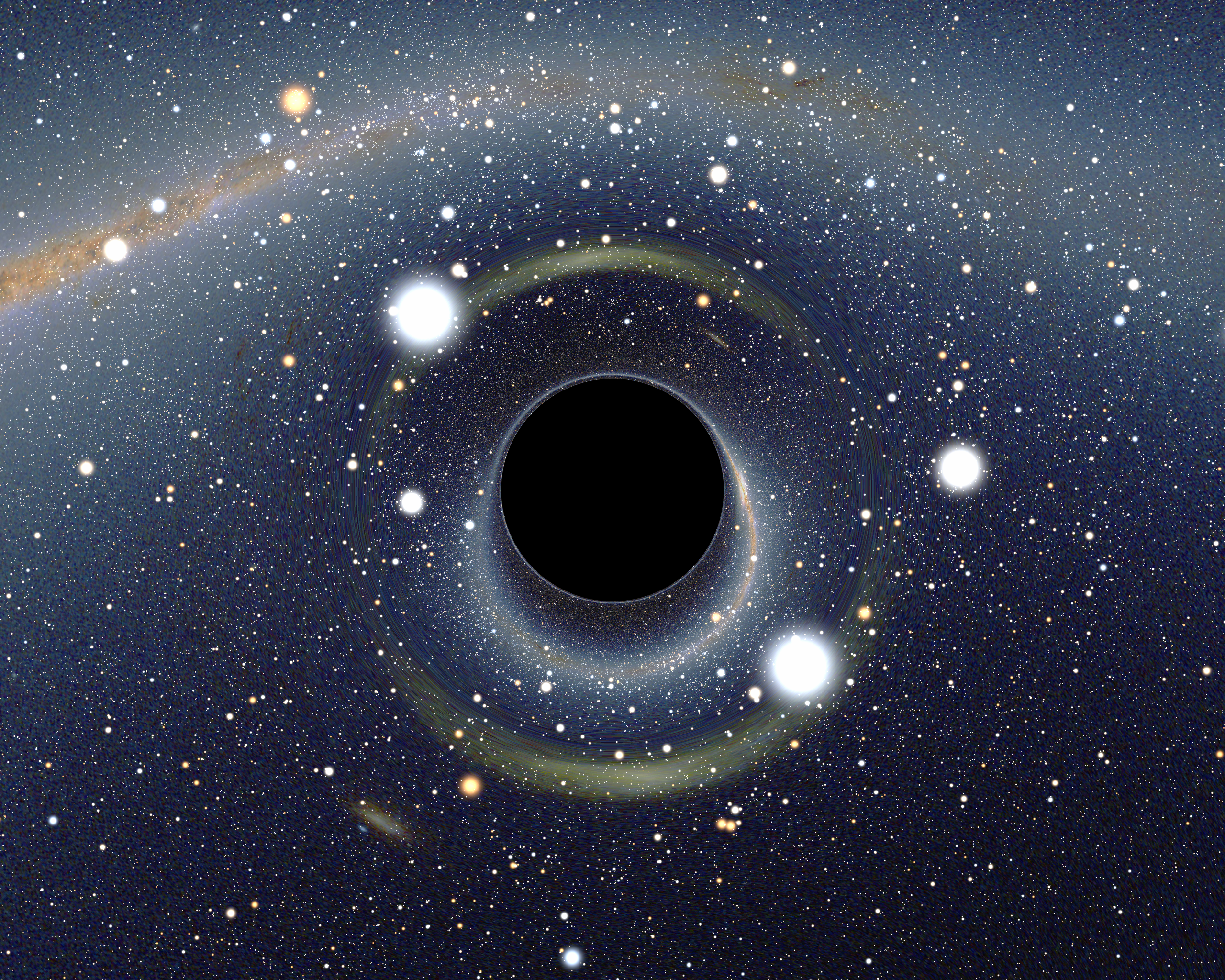
A rendering of a black hole in the Magellanic Cloud

You can think of it as a shadow cast by the subconscious over consciousness or as the shadow cast by the conscious over subconsciousness. Either way we all die, either way there's a polarity or a duality and either way consciousness requires a borrowed understanding and a shared definition. A man called Robert Lawrence Kuhn, not that nice man Thomas 'paradigm' Kuhn, but Robert 'I'm fabulous' Kuhn who amongst other things is an Investment Banker, a television personality and an expert on China, concluded that a world taxonomy of consciousness would have to include nearly three hundred theories of consciousness. The majority of those theories suggest a duality. Why bother? I'll tell you. Jung, in a very Immanuel 'let's not bother to prove this' Kantian way, decided we people shared a collective unconsciousness out of which it was possible to extract archetypes. As a result Jung was able to see a polarity between the conscious and subconscious, and out of this polarity he was able to usefully address neurosis, which I, without any evidence, suspect Jung preferred to think of as hysteria. Strictly speaking a monist theory of consciousness would be obliged to posit a universal consciousness, that would include plants, galaxies, the universe, everything. A monist theory would consider the end of the universe as the completion of the whole and the return to unity. So, as it stands, the big bang was our moment of birth, then when the universe reaches a limit to expansion, gravity pulls us back to our beginning and we end in the belly of a massive black hole. As a dying man I'm coming to the end of my ability to tolerate living in a shadow and I'm pretty damn sure my subconscious is too which is basically why neither of us gives a hoot for straight lines any longer. 

The Gods and Politics

Both Prometheus and Dionysus were very fond of us mortals. Prometheus gave us fire, the internet, social media, podcasts, television and the atom bomb. Dionysus gave us hedonistic excess, sex, drugs, rock and roll, all those good things as well as Hollywood. Had Rome been defeated and sacked following the Battle of Alesia in 52 BC we'd still be quarreling about whether Bel, Brigid, Aed or Grannus gave us the atom bomb, and whether Braciaca, Dea, Sucellius or Maeve gave us the Twelve Step Program.